
Loading
Loading
Welcome to Global Educational Consultants Empowering Educators, Learners & Families


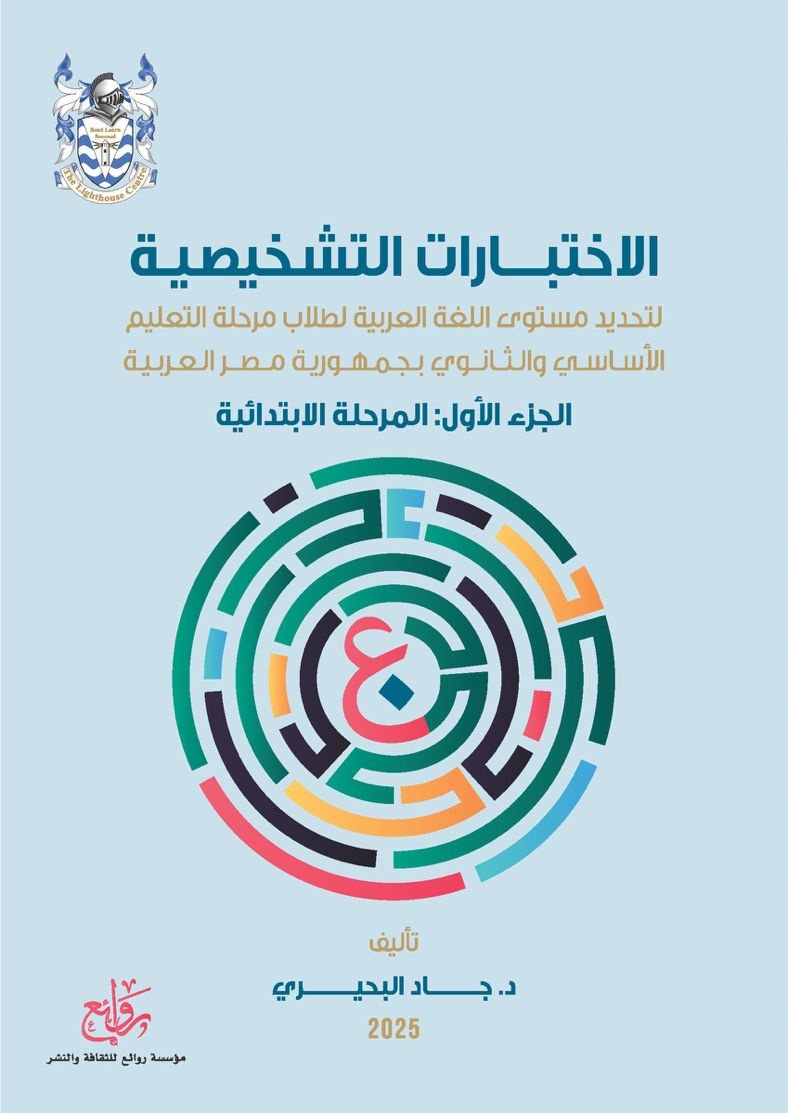
A comprehensive, research-informed diagnostic assessment battery designed to accurately determine students’ proficiency in Arabic language skills across the primary education stage (Grades 1–6).
Developed by Dr. Gad Elbeheri, this battery provides a structured, criterion-referenced framework aligned with the Egyptian national curriculum. It enables educators, psychologists, and specialists to identify students’ current performance levels, pinpoint specific areas of difficulty, and support data-driven intervention planning.
The assessment addresses a critical gap in the Arabic educational context, where standardized tools for evaluating reading, listening comprehension, and broader language skills have historically been limited. It is therefore uniquely positioned as both a diagnostic and educational decision-making tool.
The battery evaluates core language domains through carefully designed, age-appropriate tasks that measure:
Each test is individually administered, ensuring precise observation and interpretation of student performance. The results provide clear insights into strengths, weaknesses, and learning gaps, forming a solid foundation for targeted intervention and instructional planning.
A comprehensive, research-informed diagnostic assessment battery designed to accurately determine students’ proficiency in Arabic language skills across the primary education stage (Grades 1–6).
Developed by Dr. Gad Elbeheri, this battery provides a structured, criterion-referenced framework aligned with the Egyptian national curriculum. It enables educators, psychologists, and specialists to identify students’ current performance levels, pinpoint specific areas of difficulty, and support data-driven intervention planning.
The assessment addresses a critical gap in the Arabic educational context, where standardized tools for evaluating reading, listening comprehension, and broader language skills have historically been limited. It is therefore uniquely positioned as both a diagnostic and educational decision-making tool.
The battery evaluates core language domains through carefully designed, age-appropriate tasks that measure:
Each test is individually administered, ensuring precise observation and interpretation of student performance. The results provide clear insights into strengths, weaknesses, and learning gaps, forming a solid foundation for targeted intervention and instructional planning.
| Availability | Available |
| Category | Book, E-Book, Test |
| Language | Arabic |
| Paper Price | 50$ |
The assessment battery includes:
1. Grade-Specific Diagnostic Tests
2. Three Core Assessment Domains
Each test is structured into three main components:
a. Reading & Comprehension
b. Language Skills & Grammar
c. Writing & Expression
3. Scoring System
4. Administration Guidelines
5. Interpretation Value


